



- Home
- About Us
- Products
- Download
- News
- Contact Us
Leave Your Message
Choosing the best Outdoor Ring Main Unit for 2026 requires more than comparing product brochures. Distribution networks now demand safer switching, compact footprints, remote monitoring, and dependable service under harsh weather. An RMU beside a coastal road faces salt, moisture, and wind-driven dust. A unit installed in a dense city may face limited space and difficult maintenance access.
John D. McDonald, a recognized power-system engineer and protection specialist, offers a practical principle: “The best protection system is the one that works when it is needed.” This principle also applies to every Outdoor Ring Main Unit. Engineers must examine insulation technology, fault interruption, enclosure protection, automation, and lifecycle support. SF6-insulated units remain compact and familiar, while solid-dielectric designs reduce concerns linked to greenhouse gases. Air-insulated and hybrid types can also suit specific operating environments.
Performance matters most.
This guide compares the leading Outdoor Ring Main Unit types expected to shape 2026 projects. It considers installation conditions, network voltage, maintenance skills, environmental targets, and total ownership costs. Smart RMUs may provide valuable fault indicators and remote control, but communication failures can create new operational weaknesses. That detail deserves attention. Digital features should support dependable hardware, not hide poor mechanical design.
The right choice is rarely universal. A utility serving rural feeders may value ruggedness and simple field repairs. An urban operator may prioritize compact dimensions and automated restoration. Some specifications remain difficult to compare because manufacturers describe testing and service life differently. Readers should verify certification, local standards, manufacturer references, and actual site performance before procurement. Reliability is not a slogan; it is measured in cold cabinets, wet enclosures, switching cycles, and fewer unnecessary outages.
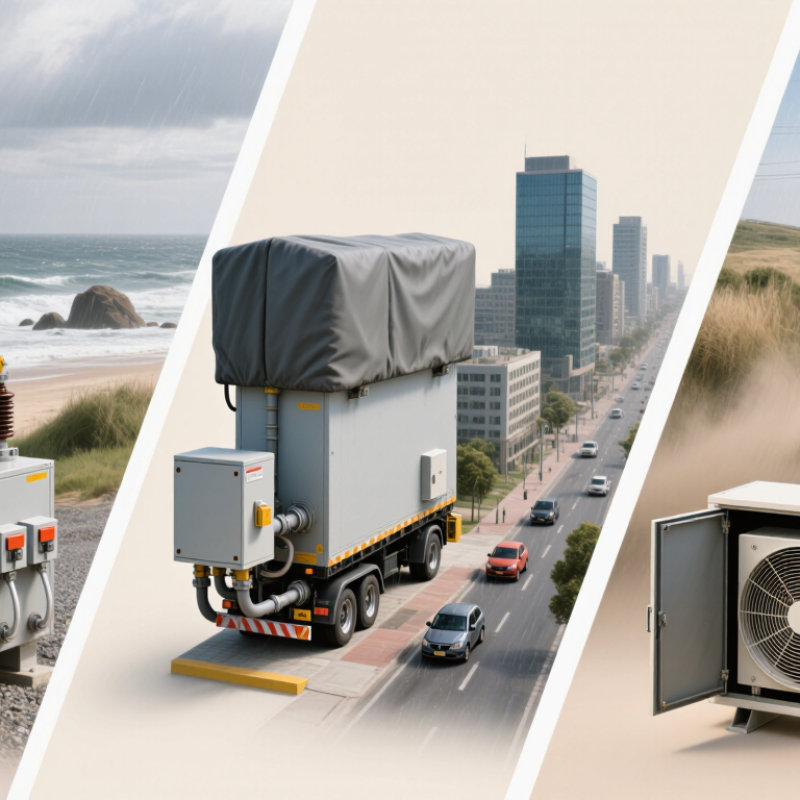
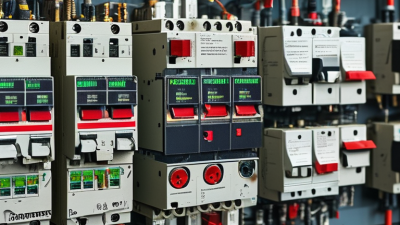
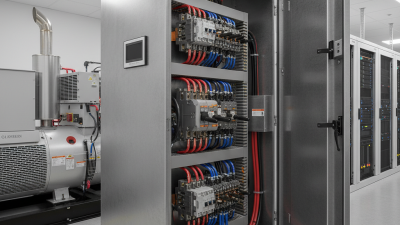
An outdoor ring main unit is a compact medium-voltage switchgear assembly for distribution networks. It connects several cable sections around a ring-shaped feeder. This arrangement keeps electricity flowing when one cable section needs isolation. The unit usually contains load-break switches, circuit breakers, earthing switches, and protection controls. Some models also include a fused transformer connection. Compact equipment matters in crowded substations.
The operating principle is straightforward. Power enters through one cable and leaves through another. During normal service, the switches remain closed. If a fault occurs, protection equipment identifies abnormal current and opens the affected section. Operators can then isolate that part and restore supply from the opposite direction. The earthing switch makes maintenance safer by grounding the isolated circuit. It must never close onto an energized section.
For 2026 projects, air-insulated, solid-insulated, and low-impact gas-insulated designs deserve careful comparison. Air-insulated units simplify visual inspection and may suit accessible outdoor sites. Solid-insulated units offer compact dimensions and strong resistance to moisture, dust, and salt air. Low-impact gas options can reduce environmental concerns, but their lifecycle data needs close review. Not every “green” claim tells the full story. Engineers should check rated voltage, short-circuit capacity, sealing quality, remote monitoring, temperature limits, and local service support. In coastal installations, corrosion protection can matter more than a smaller footprint. No design is perfect. A practical selection balances safety, maintainability, environmental conditions, and the network’s future load.
An outdoor ring main unit (RMU) is a compact medium-voltage switchgear assembly used to connect, protect, isolate, and control sections of a distribution ring. It normally includes two ring switches and one transformer feeder, circuit-breaker feeder, or fuse-switch feeder. The table below compares commonly used outdoor RMU configurations and their typical technical characteristics.
| Outdoor RMU Type | Primary Insulation / Interrupting Medium | Typical Voltage Class | Typical Main-Ring Current | Typical Short-Time Withstand | How It Works | Best-Fit Applications | Main Advantages | Important Considerations |
|---|---|---|---|---|---|---|---|---|
| SF6-insulated RMU | Sulfur hexafluoride gas provides insulation and, in load-break switches, arc interruption. | 12 kV, 17.5 kV, 24 kV, or 36 kV | Usually 400–630 A | Commonly 16–25 kA for 1–3 seconds, depending on design | Ring switches carry normal load current. A fuse-switch or vacuum circuit breaker interrupts transformer and feeder faults, while earthing switches safely ground isolated sections. | Established urban, industrial, utility, and transformer-substation networks where compactness and sealed construction are priorities. | Compact footprint, sealed primary circuit, low sensitivity to dust and humidity, and long service experience. | SF6 is a high-global-warming-potential gas. Leak prevention, recovery, handling procedures, and applicable environmental regulations are important. |
| Solid-dielectric RMU | Epoxy or other molded solid insulation; switching may use vacuum interrupters or load-break technology. | 12 kV, 17.5 kV, 24 kV, or 36 kV | Usually 400–630 A | Commonly 16–25 kA for 1–3 seconds, depending on configuration | The solid insulation supports energized conductors and limits exposure to moisture and contamination. A vacuum circuit breaker interrupts fault current where protection is required. | Environmentally conscious projects, coastal areas, renewable-energy collection systems, and locations requiring sealed, low-maintenance equipment. | No SF6 in the primary insulation, good resistance to pollution, and reduced gas-management requirements. | The enclosure and molded insulation must be protected from mechanical damage, overheating, partial-discharge defects, and unsuitable installation conditions. |
| Air-insulated RMU | Atmospheric air provides insulation; load-break switches, fuses, or vacuum circuit breakers provide switching and protection. | Commonly 12 kV, 17.5 kV, or 24 kV | Typically 400–630 A | Often 16–25 kA for 1–3 seconds, subject to the rated design | Visible or accessible switching devices open and close the ring feeders. Physical insulation distances and barriers maintain dielectric clearance. | Sites with more available space, straightforward inspection requirements, or local practices favoring air-insulated switchgear. | No insulating gas, straightforward visual inspection, and generally familiar operating procedures. | Usually larger than sealed alternatives and more affected by dust, salt, condensation, animals, and reduced clearances in harsh outdoor environments. |
| Vacuum circuit-breaker RMU | Primary insulation may be solid dielectric, air, or another sealed medium; vacuum interrupters interrupt fault current. | 12 kV, 17.5 kV, 24 kV, or 36 kV | Usually 400–630 A | Commonly 16–25 kA for 1–3 seconds | The vacuum interrupter rapidly extinguishes the arc during fault clearing. Protection relays and current transformers issue the trip command to the breaker. | Feeders with higher fault levels, motor loads, renewable generation, automation requirements, or a need for selective protection. | Fast fault interruption, repeated switching capability, adjustable relay protection, and suitability for remote operation. | Requires correct relay settings, current-transformer selection, battery or control-power design, and coordination with upstream and downstream protection. |
| Fuse-switch RMU | Insulation may be gas, solid dielectric, or air; high-voltage current-limiting fuses provide transformer fault protection. | Commonly 12 kV or 24 kV | Ring switches are often rated up to 630 A; fuse rating is selected for the transformer and load. | The assembly rating commonly falls within the 16–25 kA range; fuse interrupting capacity is specified separately. | The switch carries and isolates the transformer feeder. A fuse opens when transformer-side current exceeds its time-current characteristic. | Compact distribution substations with relatively stable transformer loading and moderate protection complexity. | Simple construction, economical transformer protection, and reliable current limitation during severe faults. | A blown fuse must be replaced. Protection selectivity is less flexible than with a relay-controlled circuit breaker. |
| Hybrid or smart outdoor RMU | Combines sealed insulation with vacuum switching, electronic protection, sensors, and communications equipment. | 12 kV, 17.5 kV, 24 kV, or 36 kV | Usually 400–630 A | Commonly 16–25 kA for 1–3 seconds, depending on the selected module | Sensors measure current, voltage, temperature, or pressure. A controller communicates status and can command motor-operated switches or a vacuum circuit breaker. | Smart grids, solar and wind connections, automated distribution networks, remote substations, and outage-management systems. | Remote monitoring, fault indication, faster isolation and restoration, condition-based maintenance, and improved network visibility. | Higher purchase cost and greater dependence on auxiliary power, communications, cybersecurity, data integration, and periodic configuration checks. |
| Operating Stage | Typical Function |
|---|---|
| Normal power flow | Two ring feeders remain available to supply the distribution network from different directions. The transformer or outgoing feeder receives power through its dedicated feeder module. |
| Fault detection | A fuse, protection relay, or fault passage indicator detects excessive current or another abnormal condition and identifies the affected section. |
| Fault isolation | The relevant load-break switch or circuit breaker opens. Earthing switches are then used according to the approved safety procedure before maintenance. |
| Service restoration | The healthy part of the ring can be re-energized from the alternate direction, either manually or through a remote-control system, while the faulted section remains isolated. |
Ratings are typical industry ranges rather than universal limits. The final selection should be verified against the applicable network voltage, prospective short-circuit current, insulation level, earthing system, environmental conditions, protection-coordination study, and relevant IEC or local standards.


 Claire
 Mr.Fu
Mr.Fu

 Claire