Leave Your Message

7 Tips for Choosing an Outdoor Ring Main Unit

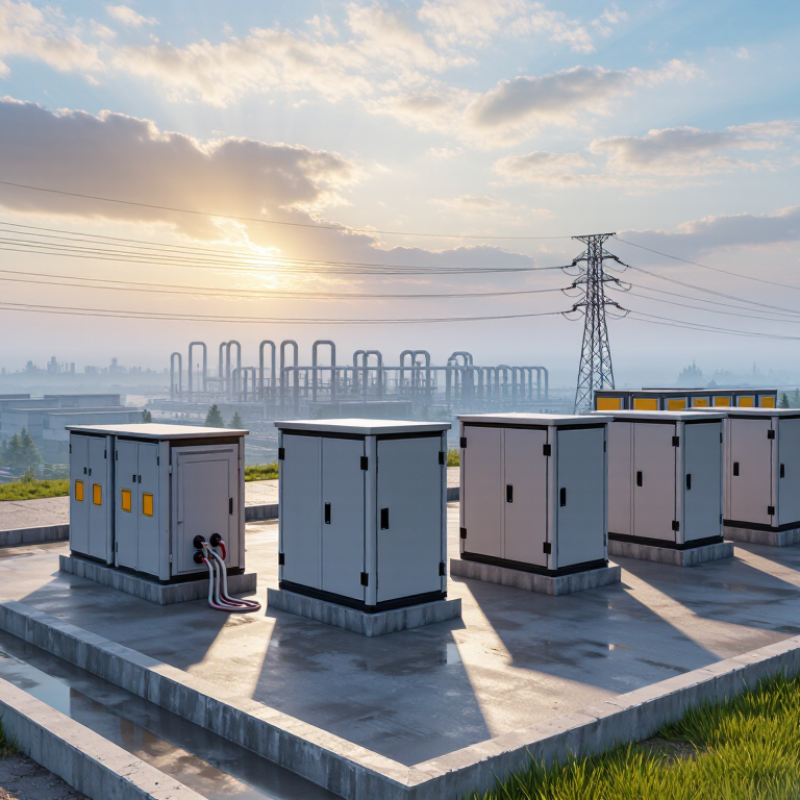
Choosing an Outdoor Ring Main Unit is not merely a specification exercise. It is a decision about safety, continuity, maintenance, and long-term operating confidence. A unit installed beside a coastal road faces salt, wind, moisture, and temperature changes. A unit serving an industrial site may face dust, vibration, and frequent switching.

Power-system engineer John D. McDonald has often stressed, “The best design starts with the application, not the equipment catalogue.” That principle fits ring main unit selection closely. Buyers should examine rated voltage, continuous current, short-circuit withstand, insulation level, switching frequency, and protection requirements before comparing brands. The smallest detail can matter.

Think beyond the enclosure.

This guide presents seven practical tips for choosing an Outdoor Ring Main Unit that matches the network and the installation environment. It considers sealing performance, corrosion resistance, earthing arrangements, fault indicators, remote operation, service access, and lifecycle support. These factors can appear technical, yet they influence real moments: a technician opening a cabinet during rain, a protection relay responding to a feeder fault, or an operator restoring supply after midnight.

There is no perfect selection. A lower purchase price may create higher maintenance costs. Advanced monitoring may be unnecessary for a small network, while basic equipment may limit future expansion. I have also seen specifications copied from older projects without questioning present conditions. That approach feels efficient, but it can hide serious risks.

The following tips offer a careful starting point. Verify every critical value against applicable standards, utility requirements, site conditions, and the manufacturer’s tested data. Credibility matters. So does practical judgment.
7 Tips for Choosing an Outdoor Ring Main Unit

Outdoor Ring Main Unit Basics and Functional Requirements

Outdoor Ring Main Unit Basics and Functional Requirements

An outdoor ring main unit (RMU) must manage switching, protection, and isolation in changing weather. Field practice shows that enclosure quality often matters as much as electrical ratings. Check the rated voltage, continuous current, short-time withstand current, and breaking capacity. These values should match the network study, not merely the existing transformer.

The U.S. Department of Energy’s Quadrennial Energy Review links distribution systems to about 90% of customer interruptions. Reliable switching is therefore a practical resilience measure.

Outdoor exposure is unforgiving. Select an enclosure with suitable ingress protection, corrosion resistance, UV stability, and mechanical strength. Consider salt spray, dust, flooding, and daily temperature changes. Verify insulation performance at the actual installation altitude.

Functional requirements should include visible isolation, safe earthing, mechanical interlocks, and clear position indicators. Remote monitoring may improve fault response, but it adds communication and cybersecurity responsibilities. That trade-off deserves careful review.

The International Energy Agency reported in Electricity Grids and Secure Energy Transitions that global grid investment must rise above 600 billion dollars annually by 2030. This expansion makes maintainability and future capacity important selection criteria.

Ask whether cable testing, fuse replacement, and inspection can be completed without unnecessary shutdowns. Check operating mechanisms under low temperatures and repeated switching. A compact design is useful, but cramped cable compartments can slow maintenance.

I would not assume every factory test predicts field performance; installation quality, local climate, and operator training still influence reliability.

Reference applicable IEC requirements and request documented routine and type-test evidence before purchase.
Assessing Voltage, Current, and Fault-Level Ratings

Choosing an outdoor ring main unit starts with three ratings: voltage, current, and fault level. They must match the network, not merely the equipment label.

Check the system’s maximum operating voltage, including possible fluctuations. A unit rated too closely can lose insulation margin during switching or storms.

Outdoor conditions matter.

Confirm the continuous current against measured load, future expansion, and transformer inrush. Do not rely only on today’s peak reading. Check the short-time withstand current and duration, such as 20 kA for three seconds, when specified by the network study. The peak withstand and making current also deserve attention.

Fault current can rise sharply near larger transformers. Ask for the utility’s calculated fault level at the installation point. Then verify the unit’s interrupting capacity and protection clearing time.

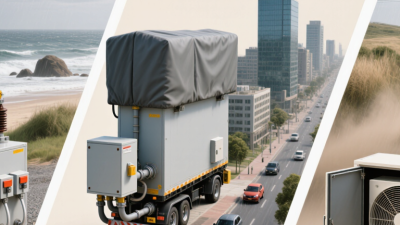
Review altitude, ambient temperature, solar heating, moisture, and pollution severity. These factors can reduce usable ratings.

During site checks, inspect cable terminations, earthing connections, and enclosure seals. Small gaps can admit water and dust.

I once saw a selection pass the current check but fail the fault-duty review because the upstream contribution was underestimated. That mistake was avoidable.

Obtain routine-test evidence, type-test reports, and applicable certification under current IEC and local requirements. Independent engineering review is worthwhile, especially when future generation or load growth may alter fault levels.

There is rarely a perfect estimate. Conservative assumptions should be recorded, challenged, and updated.

Choosing Enclosure Protection for Outdoor Installation Conditions

7 Tips for Choosing an Outdoor Ring Main Unit

Choosing Enclosure Protection for Outdoor Installation Conditions

Outdoor installation starts with the enclosure, not the switchgear. Select protection according to rain, dust, sunlight, salt, and impact risks. An IP rating should match the site conditions, with IP54 often insufficient for exposed locations. Check the requirements against IEC 60529 and the project specification. Small gaps can become serious faults.

Inspect drainage and condensation control carefully. Sloped covers, sealed cable entries, and pressure-equalizing vents help manage heavy rain and temperature changes. In humid areas, condensation may form after a cold night. A heater can help, but it also needs safe control and maintenance. This detail is often missed.

Consider UV-resistant coatings and corrosion protection near coastlines or industrial zones. Stainless hardware, treated steel, or suitable composite materials may extend service life. Verify the enclosure’s impact resistance where vehicles, tools, or falling branches are possible. Keep operating handles reachable without opening unsafe compartments. Field checks should include door seals, hinges, locks, and cable glands.

Do not choose the highest protection rating automatically. It may increase heat buildup, cost, and maintenance difficulty. Thermal performance deserves equal attention. Review internal temperature rise under full load and direct afternoon sun. A realistic site assessment is better than relying on a catalogue table. Even experienced teams can overlook dust entering through unused cable openings. Seal them properly. Test the finished installation, not only the enclosure before delivery.

7 Tips for Choosing an Outdoor Ring Main Unit – Choosing Enclosure Protection for Outdoor Installation Conditions

No. Protection Criterion Practical Selection Guidance Why It Matters Outdoors Recommended Verification Relevant Reference
1 Ingress protection Choose an enclosure rating suitable for the site. IP54 provides protection against limited dust ingress and water splashes; higher ratings may be appropriate where driving rain, dust, or wash-down exposure is expected. Rain, airborne dust, and water jets can reduce insulation performance, corrode connections, or affect low-voltage control components. Confirm the complete assembled enclosure rating, including doors, cable entries, gaskets, ventilation openings, and pressure-relief features. IEC 60529
2 Mechanical impact resistance Select a suitable IK rating when the RMU is exposed to tools, vehicles, construction activity, vandalism, or public access. IK10 represents resistance to a 20-joule impact under IEC 62262 testing. A damaged door, lock, viewing window, or cable-compartment cover can compromise both personnel safety and the enclosure seal. Review the IK rating for the specific external surfaces and inspect hinges, locks, windows, handles, and removable panels. IEC 62262
3 Corrosion protection For coastal, industrial, or high-humidity locations, specify corrosion-resistant materials or a coating system designed for the site environment. Protect fasteners, hinges, cable glands, and exposed metal edges. Salt spray, pollutants, condensation, and standing water can attack the enclosure and reduce the reliability of earthing and mechanical parts. Define the atmospheric category, coating system, surface preparation, dry-film thickness, and corrosion-test evidence in the specification. ISO 12944; IEC 62271-1
4 UV and weather resistance Use UV-stable coatings, seals, labels, cable glands, and polymeric components. Consider a sunshield or light-colored finish for installations with strong solar exposure. Ultraviolet radiation can embrittle plastics, fade safety labels, degrade gaskets, and increase enclosure temperature. Check the material data and accelerated-weathering evidence for all externally exposed non-metallic parts. IEC 62271-1; ISO 4892-3
5 Temperature and condensation control Verify the specified ambient-temperature range and assess solar heating. Where condensation is possible, consider controlled anti-condensation heaters, thermostats, breathers, or an enclosure design that limits moisture accumulation. Rapid temperature changes can produce condensation, while excessive heat can shorten the life of insulation, seals, batteries, and electronic controls. Use the site minimum and maximum temperatures, solar exposure, humidity, and equipment heat dissipation for the thermal assessment. IEC 62271-1
6 Drainage, foundation, and cable-entry sealing Provide a raised, level foundation with effective drainage. Seal unused openings and select cable glands, boots, and connectors compatible with the enclosure rating and cable type. Floodwater, splashback, capillary water ingress, and poorly sealed cable entries are common causes of outdoor enclosure failure. Inspect the installation detail for plinth height, drainage paths, gland-plate sealing, door thresholds, and water accumulation points. IEC 60529; IEC 62271-200
7 Safety, access, and maintainability Choose secure doors, interlocks, clear operating labels, safe earthing provisions, adequate working clearance, and access arrangements that allow inspection without exposing live parts. Outdoor equipment may be accessed by unauthorized persons and must remain safe during switching, maintenance, emergencies, and adverse weather. Review the earthing continuity, interlocking scheme, lock system, arc-fault provisions, operating space, and maintenance procedures. IEC 62271-200; IEC 62271-1

Note: The appropriate enclosure protection level depends on the installation environment, local regulations, utility requirements, and the complete assembled RMU design. IP and IK ratings should be confirmed from applicable test documentation rather than inferred from individual components.

Comparing Switching, Protection, and Automation Features

7 Tips for Choosing an Outdoor Ring Main Unit

Tip 1: Examine the switching arrangement before comparing prices.

An outdoor ring main unit should isolate faults clearly and restore supply efficiently. Check whether the load-break switch matches the system voltage, current, and fault level. A visible position indicator helps technicians confirm open or closed status from ground level. Small details matter during rain, darkness, or maintenance.

Tip 2: Study protection coordination, not just interrupting capacity.

Fuses, circuit breakers, and relays must work with upstream and downstream equipment. Incorrect settings can trip healthy feeders or delay fault clearance. I have seen projects focus on ratings while overlooking cable length and transformer behavior. That approach needs reconsideration. Verify calculations against applicable utility requirements and the IEC 62271 series.

Tip 3: Compare automation features with actual operating needs.

Remote indication, motorized switching, fault passage indicators, and communication interfaces can reduce outage time. However, automation adds wiring, testing, and maintenance duties. Ask how the unit behaves when communication fails. Local control should remain clear and dependable. Check event records, battery life, and access control before approving the design. A feature list alone proves little. Field acceptance tests should simulate switching, protection trips, and loss of auxiliary power.

Verifying Standards, Maintenance Needs, and Supplier Support

An outdoor ring main unit (RMU) deserves more than a catalogue comparison. The U.S. Department of Energy reported that distribution systems caused about 92% of outage minutes. Therefore, enclosure quality, switching reliability, and service access matter greatly.

Tip 1: confirm compliance with IEC 62271-200 for metal-enclosed switchgear above 1 kV and up to 52 kV.

Tip 2: check the declared short-time withstand current, internal arc classification, and tested configuration. A certificate alone is not enough.

Tip 3: verify the enclosure’s IP rating under IEC 60529. Look closely at door seals, cable entries, drainage, and corrosion protection. Salt spray and standing water expose weak details quickly.

Tip 4: request a maintenance schedule based on actual operating conditions. IEEE and NETA guidance generally supports condition-based inspection, but many projects still use fixed intervals without reviewing fault history. That habit deserves questioning.

Tip 5: ask how pressure indicators, interlocks, earthing switches, and gas compartments are inspected. Record thermal images, torque checks, and contact resistance results. Small records become useful evidence later.

Tip 6: evaluate supplier support before purchase. Require local response times, spare-part availability, training, and digital service records.

The IEA’s Electricity Grids and Secure Energy Transitions report says annual grid investment must rise from roughly USD 300 billion today to over USD 600 billion by 2030. That expansion may strain technical support capacity.

Tip 7: request references for similar climates and fault levels. Visit one installation if possible. A polished factory test cannot reveal every field problem. Ask difficult questions early.