



- Home
- About Us
- Products
- Download
- News
- Contact Us
Leave Your Message
Electric Switchyards are the connection points where power lines, transformers, and protection systems work together to direct electricity safely. Their design affects reliability, operating costs, and how quickly a project can connect to the grid. Choosing a supplier, therefore, means looking beyond equipment prices. Engineering capability, manufacturing quality, testing records, and after-sales support all matter.
The scale of grid investment makes this choice increasingly important. The International Energy Agency’s 2023 report, Electricity Grids and Secure Energy Transitions, says annual grid investment must rise to more than USD 600 billion by 2030 to meet global needs. China’s National Energy Administration reported installed power generation capacity of about 3.35 billion kilowatts at the end of 2024. That expanding system creates demand for dependable substations and switchyard equipment, but market size alone does not prove supplier quality.
This guide examines leading Chinese suppliers through practical criteria: voltage range, project experience, equipment standards, factory testing, delivery capability, and service after commissioning. Buyers should check whether a company has completed projects similar in scale and operating conditions. Ask for verified references, test documentation, and clear technical boundaries. A polished catalog is not enough. “Top” depends on the application, and supplier claims deserve careful review. Even capable manufacturers may differ in engineering depth, export experience, or support once equipment reaches the site. That detail is easy to overlook.
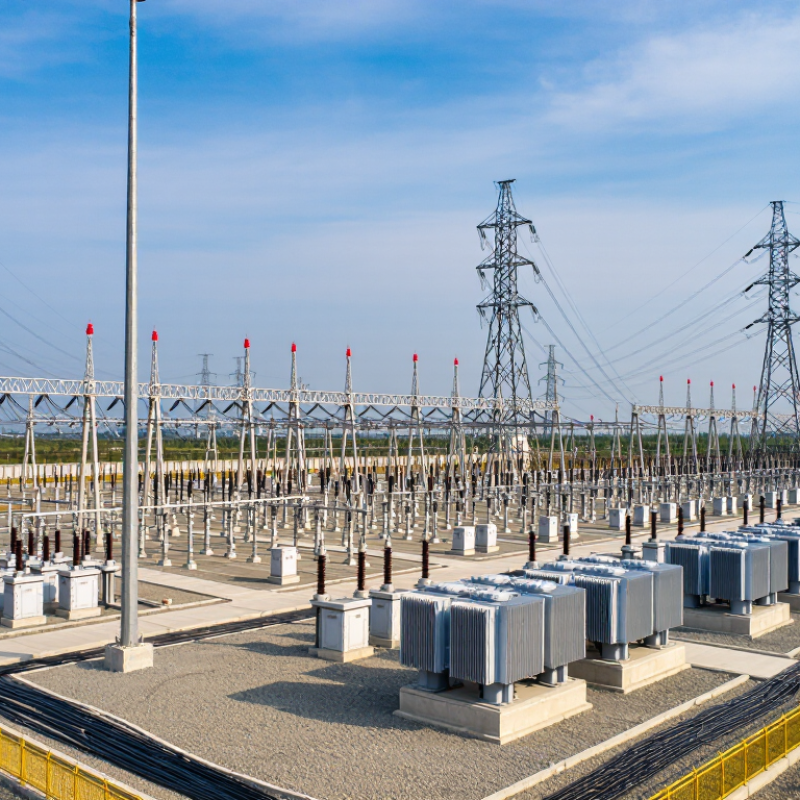
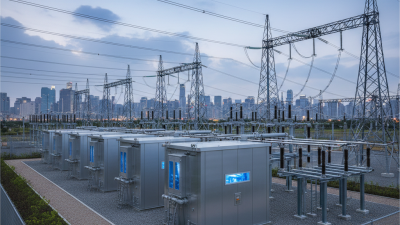
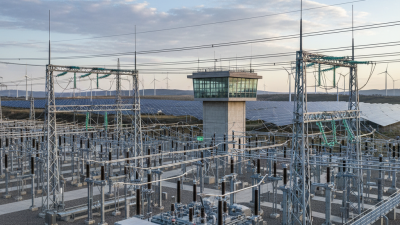
An electric switchyard is the outdoor or indoor area where power circuits connect, disconnect, and transfer electricity. It typically contains busbars, circuit breakers, disconnectors, instrument transformers, and surge protection. These components help route power from generating stations into transmission networks and isolate faults when equipment needs attention. The details matter. A breaker’s location affects how quickly a faulted section can be separated.
Across China, switchyards support a vast grid serving cities, factories, and remote regions. Designs must account for site conditions such as high humidity, dust, temperature swings, and limited maintenance access. In some projects, long transmission distances make reliable switching and clear system coordination especially important. A tidy layout on paper may still leave awkward access around a real piece of equipment. There is no perfect arrangement for every site.
Tips: When assessing a supplier, check engineering documents, testing records, material specifications, and after-sales support. Ask how equipment suits the project’s voltage level and local environment. Confirm that maintenance clearances are practical, not merely compliant on a drawing. Small omissions can become frustrating later.
| Supply or Capability Area | Typical Scope | Role in a Switchyard | China Project Considerations | Useful Evaluation Checks |
|---|---|---|---|---|
| Air-insulated switchgear (AIS) | Outdoor circuit breakers, disconnectors, instrument transformers, busbars, and supporting structures. | Connects and isolates transmission circuits in an open-air arrangement. | Often considered where land is available and outdoor equipment access is practical; the selected voltage and layout depend on the grid connection and project design. | Review equipment ratings, insulation coordination, corrosion protection, seismic requirements, and the proposed site layout. |
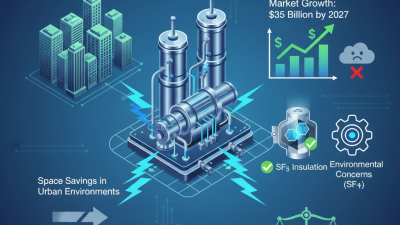
| Gas-insulated switchgear (GIS) | Enclosed switching and measurement equipment using gas-insulated compartments. | Provides switching functions in a compact, enclosed arrangement. | Can be useful at constrained sites, including dense urban or industrial locations. Gas handling, leak monitoring, maintenance access, and end-of-life management should be addressed. | Check applicable standards, gas-management procedures, enclosure protection, maintenance provisions, and documented type-test results. |
| High-voltage circuit breakers | Breakers selected for the system voltage, rated current, and fault-interruption duty. | Interrupts normal load current and, within its specified ratings, fault current. | China’s transmission network includes voltage levels such as 220 kV and 500 kV, as well as 1,000 kV AC UHV projects; the required rating is project-specific. | Verify short-circuit breaking capability, operating duty, insulation level, mechanism reliability, and routine and type-test documentation. |
| Disconnectors and earthing switches | Isolation devices and grounding switches matched to the switchyard configuration. | Provide visible or specified isolation and establish grounding conditions for safe maintenance, as designed. | Interlocking arrangements must coordinate with the breaker, busbar layout, and operating procedures. | Assess mechanical endurance, interlocks, contact performance, operating mechanism, and maintainability. |
| Instrument transformers and sensors | Current and voltage transformers or approved measurement technologies. | Supply measurement inputs for metering, protection, and monitoring systems. | Accuracy, insulation level, burden, and compatibility depend on the protection and metering design. | Confirm accuracy classes, secondary connections, insulation requirements, test reports, and interface compatibility. |
| Busbars and primary connections | Conductors, fittings, insulators, connectors, and associated support structures. | Distribute electrical power between incoming and outgoing circuits and switching equipment. | Layout and conductor selection must account for rated current, fault forces, clearances, environmental conditions, and expansion needs. | Review thermal and mechanical calculations, material specifications, clearances, and connection details. |
| Protection, control, and substation automation | Protection relays, control panels, communications interfaces, and monitoring functions. | Detects specified abnormal conditions and supports equipment control, alarms, and operational data exchange. | Interfaces must align with the owner’s protection philosophy, communications architecture, cybersecurity requirements, and grid-connection requirements. | Check functional specifications, interoperability, redundancy, configuration records, cybersecurity measures, and factory acceptance testing. |
| Engineering, integration, and testing | Design coordination, equipment integration, installation support, commissioning, and documentation. | Ensures primary equipment, protection, control, civil works, and operating interfaces function as a coordinated system. | For projects connected to China’s grid, confirm the project owner’s technical specifications and applicable national, industry, and grid-connection requirements. | Review relevant project experience, design responsibility, quality processes, commissioning plans, test records, training, and after-sales support. |
Note: This table compares switchyard equipment and supplier capabilities, not individual companies or a ranked supplier list. Voltage levels and technical requirements vary by project; confirm them against the project specifications and applicable standards.


 Claire
 Mr.Fu
Mr.Fu

 Claire